The Stunning Bird Taking Over WA That You Should Be Worried About
They might look striking with their vibrant colour, but wildlife experts say the growing presence of rainbow lorikeets in our area is cause for concern.
By Wade McColl (19/08/2025).
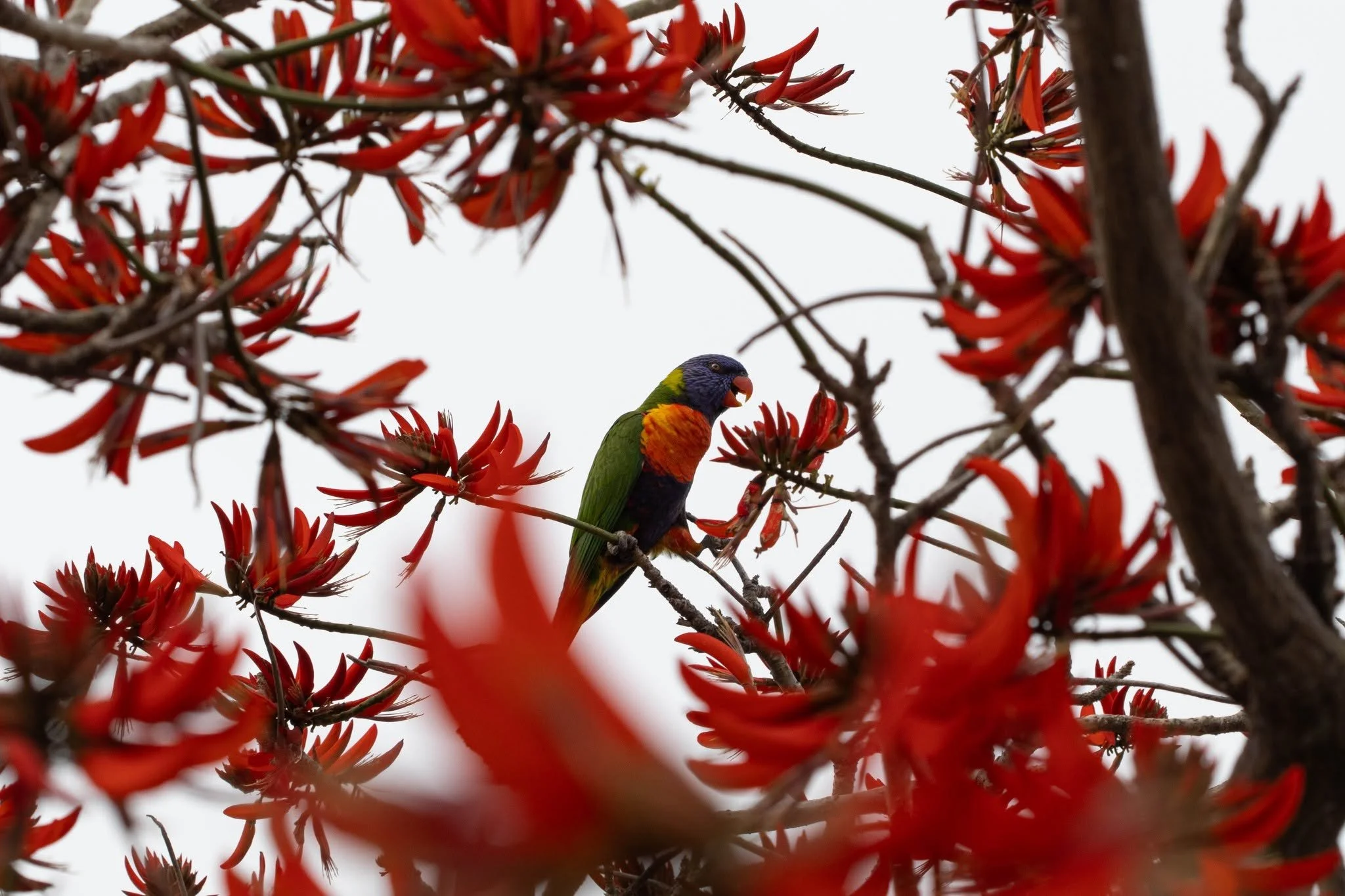
A rainbow lorikeet (Trichoglossus moluccanus) spotted feeding on a coral tree in Baldivis. Photo by Wade McColl, Baldivis Times 2025.
Rainbow lorikeets are one of Australia's most recognisable and visually stunning birds - but here in Western Australia, they carry a very different status to the one many people might expect.
The rainbow lorikeet is a declared pest in Western Australia, and their presence outside the Perth metropolitan area is something authorities are actively working to prevent.
How Did They Get Here?
The rainbow lorikeet has been established in Perth, Western Australia, since 1968.
From fewer than 10 escaped or released birds, the pest bird is now well established in metropolitan Perth. Their numbers have exploded from those original 10 to 40,000+ birds.
What began as a handful of aviary escapees has grown into one of WA's most significant introduced bird problems - and the numbers continue to climb.
Why Are They a Problem?
For all their visual appeal, rainbow lorikeets pose a serious and well-documented threat to WA's native wildlife and agricultural industries. They are a threat to local, declining species such as the Red-capped Parrot, Western Rosella and Australian Ringneck, and they displace other birds from tree hollows, negatively impacting our black-cockatoos.
The agricultural impact is equally significant. The Department of Agriculture and Food, WA estimates that rainbow lorikeets damage roughly $3 million worth of commercial fruit crops each year in south-west WA.
On top of that, they are carriers of Psittacine beak and feather disease and pose a potential disease risk to wild and captive parrots. Add to this the noise, droppings and general disruption that large flocks bring to residential areas, and it's clear why wildlife authorities treat this species so seriously.
What Does the Law Say?
Under legislation administered by the Department of Primary Industries and Regional Development, rainbow lorikeets are declared pests in WA in all areas south of the Kimberley, including metropolitan Perth. This means private, municipal, and state government landholders are responsible for control of lorikeets on their land.
In southern parts of the state, including metropolitan Perth, no rainbow lorikeets, including those captured or rescued, can be legally released into the wild.
Given the size of the lorikeet population in Perth, eradication is unlikely, but a reduction in the numbers at key locations may be possible. So, to prevent satellite populations establishing in the wild, the department retrieves or removes rainbow lorikeets from regional locations.
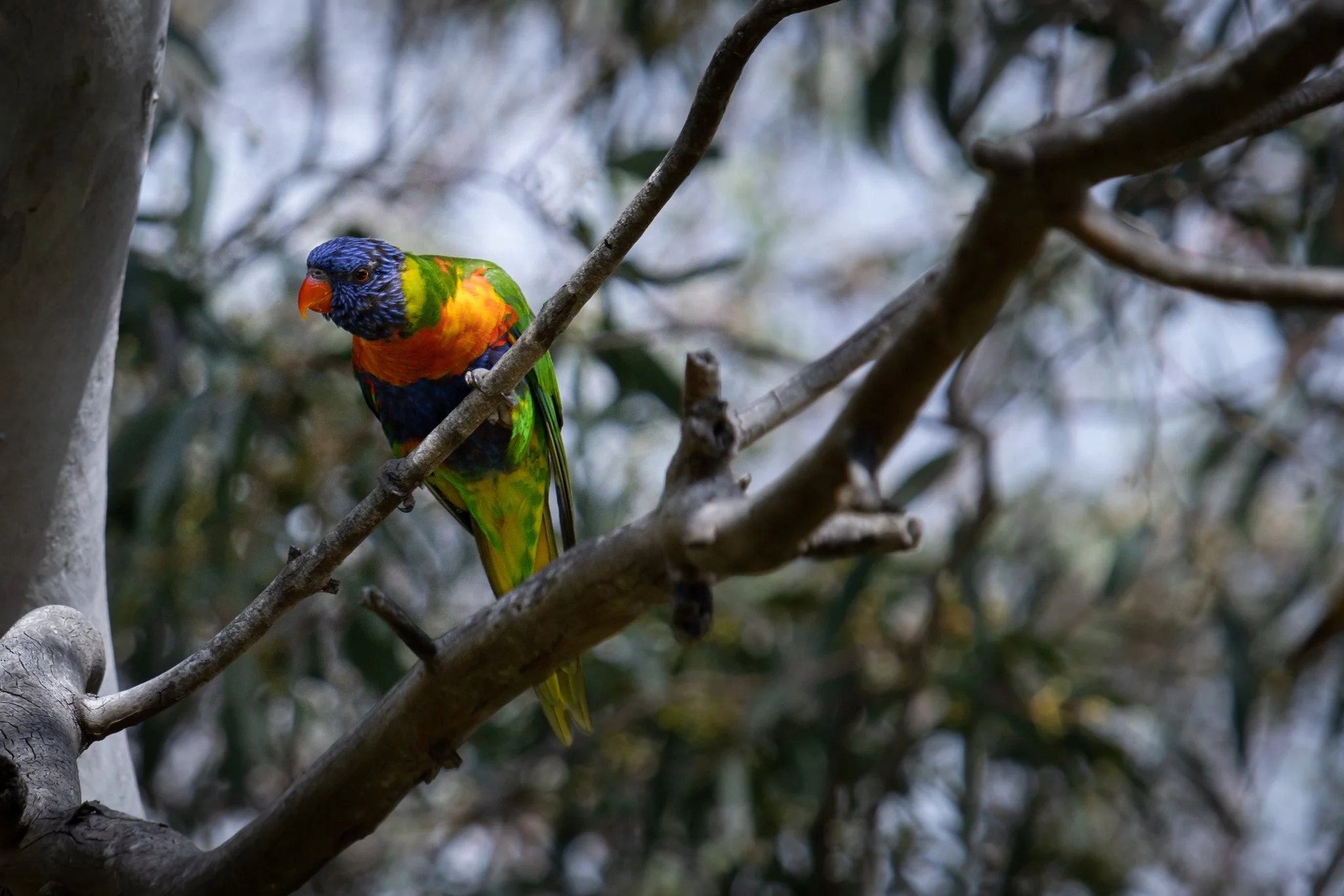
A rainbow lorikeet looks down from a branch at Beeliar Regional Park, North Lake. Photo by Wade McColl, 2021.
What Does This Mean for Baldivis?
While sightings in Baldivis remain relatively new, the proximity of our suburb to the established Perth metropolitan population means that isolated sightings like this one could become more frequent over time.
DPIRD has an ongoing monitoring and control program for rainbow lorikeets and has been carrying out surveillance and control in areas beyond the metropolitan boundary - and our community can play a direct role in that effort.
If the rainbow lorikeet population were to establish itself in Baldivis and the wider Rockingham area, the potential impact on our already vulnerable local wildlife, including the Black Cockatoos that call this area home, would be significant.
What Should You Do If You Spot One?
If you see a rainbow lorikeet in or around Baldivis, do not feed it or befriend it - report it immediately. You can report sightings using the MyPestGuide reporter app, available at dpird.wa.gov.au, or by emailing mypestguide@dpird.wa.gov.au.
Note the date, time and location of the bird and photograph it you can.
Early reporting is one of the most effective tools we have in keeping Baldivis' wildlife protected.